

Healthy Vision Month
This May, Lions World Vision Institute is observing Healthy Vision Month to raise awareness about eye health and the importance of regular eye care. With millions of Americans at risk for vision loss due to preventable or treatable eye conditions, this month serves as a timely reminder to take proactive steps to protect our sight.
According to the Centers for Disease Control and Prevention (CDC), more than 4.2 million Americans aged 40 and older are visually impaired, and nearly half of all blindness is preventable. People with vision problems are more likely than those with good vision to have diabetes, poor hearing, heart problems, high blood pressure, lower back pain and strokes, as well as have increased risk for falls, injury and depression.
Additionally, 1 in 4 children have an undiagnosed vision problem. Vision disorders in children affect cognitive, social, and physical development; future health; and well-being. An eye health problem can be the reason a child does not perform well at school. Conditions such as amblyopia (lazy eye) or strabismus (crossed eye) can go undetected and, if not addressed by the time a child is eight years old when eyesight is fully developed, can lead to lifelong problems and result in an irreversible loss of sight.
Lions World Vision Institute’s Vision Health Program provides everything from initial screening to glasses dispensation and referrals for further care. LWVI’s Youth Vision Program and Mobile Vision Clinic events are specifically designed for children ages 5-17, offering a gateway to essential vision care services.
To learn more about these programs and for upcoming clinic information, please visit: https://lwvi.org/vision-health/
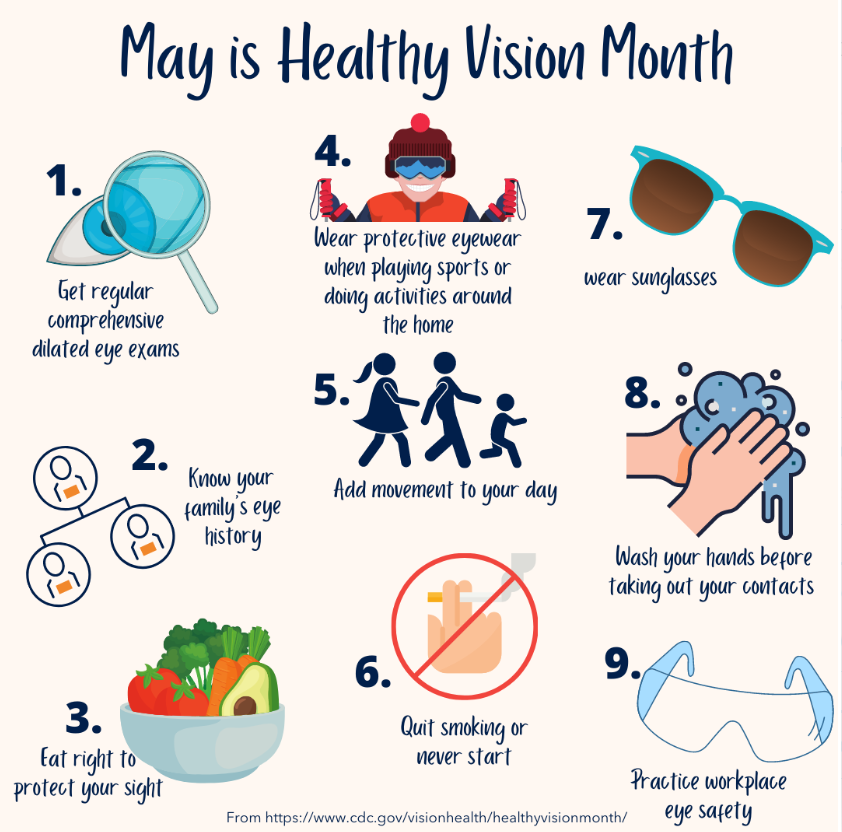
Nine ways you can help protect your vision today.
- Get regular comprehensive dilated eye exams.
- Know your family’s eye health history. It’s important to know if anyone has been diagnosed with an eye disease or condition, since some are hereditary.
- Eat right to protect your sight: In particular, eat plenty of dark leafy greens such as spinach, kale, or collard greens, and fish that is high in omega-3 fatty acids such as salmon, albacore tuna, trout, and halibut.
- Get physical activity
- Wear protective eyewear when playing sports or doing activities around the home, such as painting, yard work, and home repairs.
- Quit smoking, or don’t smoke at all.
- Wear sunglasses that block 99 percent-100 percent of ultraviolet A (UVA) and ultraviolet B (UVB) radiation.
- Wash your hands before taking out your contacts and cleanse your contact lenses properly to avoid infection.
- Practice workplace eye safety.
Source: https://www.cdc.gov/visionhealth/basic_information/vision_loss.htm